
Dear Peloton, We Should Talk.
Why lululemon Still Has Room to Tank
How Peloton Goes From Cautionary Tale to Comeback Story
Dear Peloton, we should talk…
Not about bikes.
Not about hardware margins.
About the part of the business that actually determines whether you matter in five years.
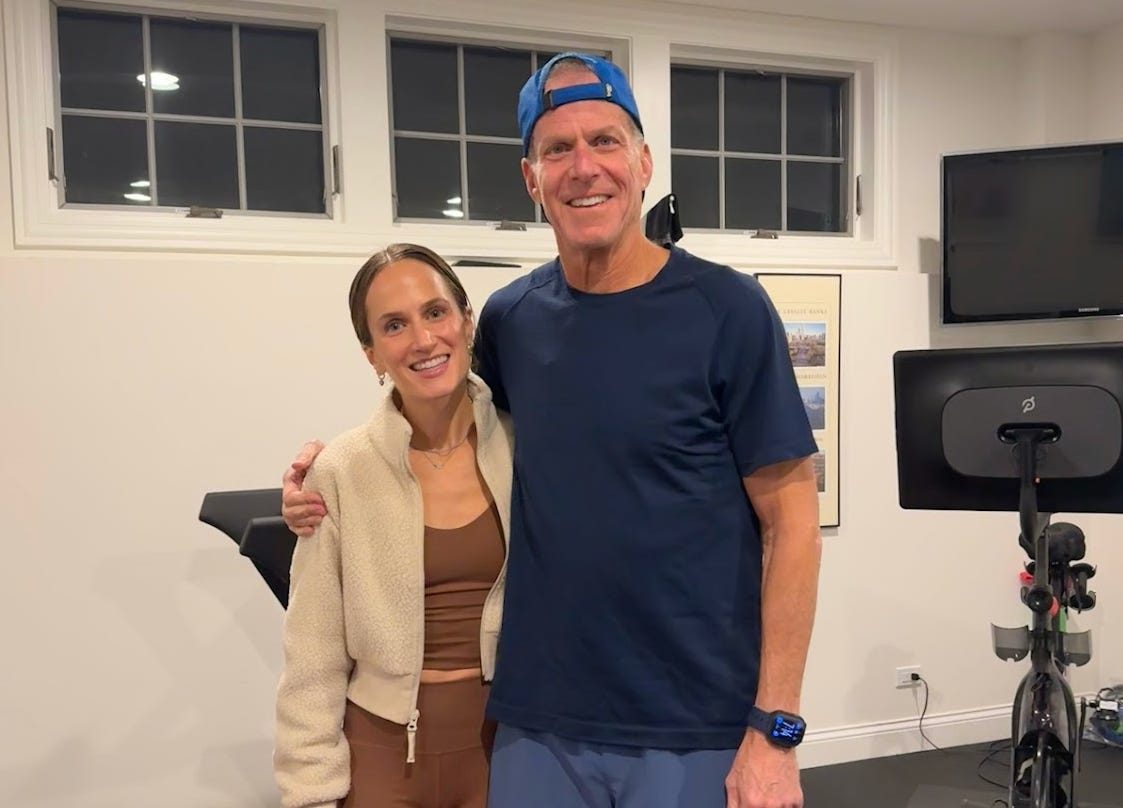
When I’m in Chicago, my dad and I do Peloton strength together every day. No negotiating. Even during chemo, we open the app, pick a class, and move.
That experience stuck with me.
Because while I was curating 2025 wellness trends across the industry, Peloton kept surfacing.
Which sent me down a different line of thinking entirely.
Not did Peloton matter?
But does Peloton still have legs?
I think it does.
Peloton didn’t win because of bikes or treadmills. It won because it built culture. A shared language. A way of turning metrics into meaning and consistency into identity. You made people who had never met feel like they were in the same room, moving through something together. That kind of belonging is scarce in a world optimized for feeds, not connection.
Which is why this moment matters.
You’ve done the hard, necessary work. Cost discipline. Margin focus. A cleaner subscription-led model. AI-driven personalization. Expanded strength, recovery, and mental health programming. On paper, Peloton is a tighter, more resilient business than it was a few years ago.
The question isn’t whether the strategy is smart. It is.
The question is what unlocks growth from here.
I’d argue it’s the same thing that unlocked Peloton in the first place: community, fully activated.
The open lane is the world beyond the leaderboard. Peloton is uniquely positioned to turn shared effort into shared culture. If strangers can high-five across time zones, they can also train together, gather together, and build something local and lasting. Other brands once owned this and let it fade. That lane is open again, and it happens to be Peloton-shaped.
I want to take Jermaine Johnson on tour. Put him on stage not just at O2 but at the Intuit Dome, thousands of us moving together like a concert where sweat is the main act.
Let me put together a sunrise run with Becs Gentry that takes over the West Side Highway (just think of the viral photos that come from a drone shot of that).
And merch that actually means something. Not just logos, but insider language. A shirt that says “You don’t have to, you get to” because you belong to the Jess Sim’s fan club with pride.
This part is worth underlining: community isn’t soft. It’s economic. You’ve stabilized the business. Now the growth question becomes emotional, not mechanical. People don’t churn from things they belong to.
Which brings me to my final point, said plainly (although hopefully humbly):
Peloton should have a role whose sole mandate is turning community into strategy and belonging into growth. Call it Chief Community Officer. Head of Member Experience. Architect of Vibes. Titles are flexible, but the mandate is not.
Someone whose job is to wake up every day asking:
”How do we take Peloton from a screen in your living room to a presence in your life?”
If any board members are reading this, consider this me raising my hand.
If I were inside Peloton, I’d stitch digital and physical together with intention. Community embedded into every modality. Every launch paired with a ritual. Every city given a reason to gather. Not louder branding. Deeper roots.
Peloton doesn’t need a reinvention. It needs clear ownership of the thing that made it iconic and accountability for evolving it forward.
Peloton changed fitness once.
The opportunity now is to change what community looks like in wellness.
So yes, Peloton still has legs.
The 2% Club Is Having a Moment. Quietly.
Something’s shifting in wellness right now. The noise is getting louder. But the people thinking sharper and actually shaping what comes next are finding each other.
That’s happening at The 2% Club. The trusted hub for women building and investing in wellness. The community. The podcast. The rooms you want access to.
If you’ve been listening quietly, this is your nudge to lean in. If you’re joining us in New York, we’ll see you in the room. And if you’re watching from afar, keep watching. The future of wellness is being built here, and 2026 is going to be very interesting.
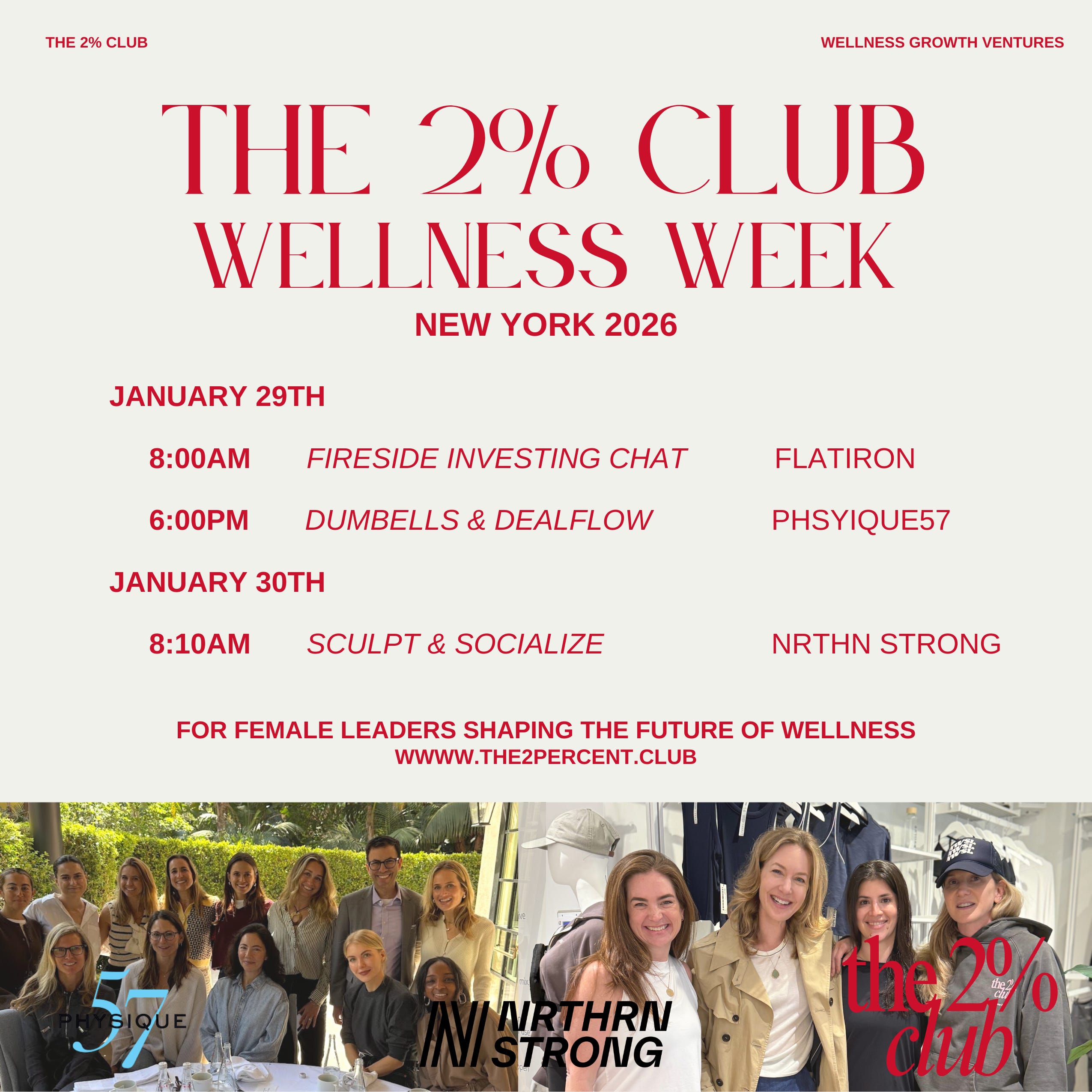
Wellness Week by The 2% Club is happening in New York this month:
Fireside Investing Chat | Jan 29 | Sign Up Here
Physique57 | Jan 29 | Sign Up Here
NRTHRN Strong | Jan 30 | Sign Up Here
Different formats, same through-line: intentional rooms, high signal, and zero ego.
Being “Nice” Is Killing Great Brands & lululemon Needs to Choose
Being “nice” is the most dangerous place a premium brand can land.
Lululemon’s issue isn’t relevance in the abstract. It’s clarity. You can sign Kelsea Ballerini. You can outfit elite athletes. You can do Disney, Erewhon, and whatever collab checks the “culture” box that quarter. And still miss. Because cool isn’t additive. It’s subtractive. Cool comes from saying no to most things and letting a very specific point of view compound over time.
This is where Chip Wilson and Elliott Management are closer than they appear. Chip is reacting to a loss of taste. Elliott is reacting to a loss of speed. Different language, same diagnosis. Lululemon stopped making fast, opinionated decisions and replaced them with process.
The Disney collab made that painfully clear. Commercially fine. Strategically risky. Disney signals mass, safety, and breadth at the exact moment lululemon needed restraint. It pushed the brand further into a middle that’s actively collapsing. When that happens, consumers don’t buy the off-brand luxury option. They either trade up to the real thing or down to value. Brands in the middle get stuck being “nice.” And lululemon flirted with nice.
The CEO decision, which is where lululemon either reasserts itself or drifts into another cycle.
If the board goes with someone like Jane Nielsen, or even Heidi O’Neill, you’re looking at a Ralph Lauren–style resurgence play. Tighter merchandising discipline. Cleaner brand architecture. Fewer bets, more polish. That path restores order, elevates premium perception, and stabilizes the business. It makes lululemon sharper and more grown up. It does not, on its own, make it culturally magnetic again.
If the board goes bolder, someone in the Sarah Mensah or Julie Bornstein archetype, the direction changes entirely. Culture-forward. Product as identity. Willingness to polarize. That path looks much closer to how Alo Yoga built heat. Fewer explanations. Stronger signals. Faster cycles. Riskier, yes. But also the only route that actually reclaims cool.
This is the fork:
Operational excellence versus cultural offense. One protects the business. The other reclaims the moment.
Lululemon cannot do both halfway.
So is the stock a buy, or still room to tank?
Near term, I think there’s still room to tank. CEO transitions plus activist pressure create a messy middle. Guidance tightens. Restructuring costs surface. The market punishes uncertainty before it rewards the reset. Elliott doesn’t mind that volatility. They expect it.
Long term, this starts to look like a Warren Buffett-style value setup. The real buy signal isn’t today. It’s when the org changes are visible and the product starts making clearer, riskier statements.
While lululemon sorts itself out, Vuori and Alo benefit simply by staying focused. Vuori keeps winning on softness, male crossover, and quiet confidence. Alo keeps owning the fashion-forward wellness uniform. Neither needs lululemon to fail. They just need it to stay distracted.
Lululemon doesn’t need more partnerships, more faces, or more storytelling. It needs fewer things on the rack and stronger opinions embedded in them.
Cool doesn’t come from adding energy. It comes from removing indecision.
And that’s the work ahead.
A quick note before we go further.
This year, I’m going to be putting more of my real thinking behind the paywall.
Not summaries of what already happened.
Not recycled headlines.
But the stuff I actually believe before it’s obvious.
If you’re reading this and thinking, yes, more of this, I’d love to know what you want to see more of. I’m shaping this with you.
Vote below. (You can pick more than one.)
🪩👇 Become a paying subscriber to get access to the rest of this post and other subscriber-only content.
🔒 Behind the Paywall: What I Actually Think Happens Next at Lululemon
Here’s the part I wouldn’t write for everyone.
